Monday, July 3, 2017

Camels and Clown Cars

We've been in Israel for 2 days so far.

I was brilliant and took a sleeping pill on the overnight flight here from SFO, so I haven't suffered at all from jet lag (winning!).

We all won though when we arrived to Tel Aviv and United Airlines had left two of our boxes behind at SFO.

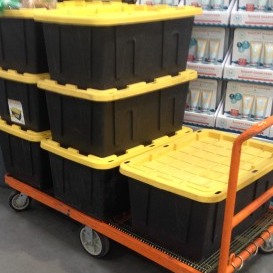
This may seem like a bad thing, but... that's only because you don't know how the volume of our rental cars compared to our luggage. Thanks to a mistake on Avis's part, the two automatic, economy cars we booked magically turned into two manual, compact cars (Chevy Sparks, to be exact).

Image result for chevy spark

After some heavy-duty tetris, a comical clown car drive through the camel-spotted Negev Desert, and several bottles of water - we finally arrived in Be'er Ora where we will be living the next 2 months.

Image result for camel sign israel

At IUI, it's become abundantly clear that our days will be starting early because it's so hot and ending early with some quality snorkeling to beat the heat. Never lived in a place so hot before, but I feel pretty fancy having an air conditioned office now.


Tuesday, June 27, 2017

Book Report: My Promised Land

A few months ago, the IRES group met with Sarah, the executive director of Santa Cruz Hillel. The purpose of the meeting was to allow us to ask questions about Israeli culture, politics, and overall social climate before leaving. Before this meeting, I wasn't really concerned with this sort of thing. I had made little to no effort to understand anything about Israeli history or politics. Below is an actual verbal exchange, followed by my best interpretation of nonverbal facial cues:

Verbal:
Me: Are there any books you would recommend (on the topic of Israeli history and politics)?
Sarah: There are lots of books. What are some of your views?
Me: Umm...
Sarah: For instance, how do you feel about the settlements?
Me: ....

Perceived nonverbal:
Me: Settlement. (1) An official agreement intended to resolve a dispute of conflict. (2) A place where people establish a community.
Sarah: He's thinking, I'll be patient.
Me: Both of these definitions are probably relevant to Israeli history...
Sarah: This is taking a while. Perhaps he doesn't want to offend me?
Me: Maybe it's fine that I don't know what she's referring to. Maybe this isn't embarrassing.
Sarah: Does...he not know what a settlement is?
Me: This is embarrassing.
Sarah: He doesn't know what a settlement is.
Me: ....

After the awkward silence, Sarah recommended My Promised Land by Ari Shavit.


Shavit is a prominent journalist and columnist for the Israeli newspaper Haaretz. Published in 2013, The Promised Land is a collection of historical snapshots of Zionism, from the arrival of Shavit's great-grandfather to Palestine in 1897 to present-day Israel.

As the title of the book suggests, each of these snapshots holds special value for the author. After chronicling the 1897 emigration of Herbert Bentwich (Shavit's great-grandfather) from England to Palestine, Shavit takes the reader to kibbutz Ein Harod of the 1920s, the 1930s orange groves of Rehovot, Shmaryahu Gutman's 1942 pilgrimages to Masada, and the 1948 forced exodus of Lydda. Many of these stories contain members of the author's family, and he frequently describes himself digging through archives or interviewing survivors.

The book changes tone somewhat at this point. We move to the housing estates of the 1950s, where Shavit was born and raised. In addition to historical accounts and interviews, Shavit uses his own memory, fitting in his life experience with historical context. He interviews key players in the Dimona project, in which Israel armed itself with nuclear weapons. He travels to Ofra, the first settlement (!) of Jews in occupied Palestine, and interviews its founders. He describes his own military service in the Gaza Beach detention camp in 1991. He then covers the Oslo Accords and the rise and fall of Arie Deri.

Once again, the book changes tone as Shavit moves into the 21st century. In the first third of the book, Shavit's role is mostly as an impartial narrator. In the second, Shavit is a character in the narrative. Now, many of the remaining chapters are not even focused on specific events in Israeli history. Shavit is covering modern Israel, and gives the reader a sense of the current state of affairs. He investigates the LGBT and club scenes in Tel Aviv, and in the following chapter has a conversation with a Palestinian-Israeli attorney on the occupation. After a very brief chapter on the Second Lebanon War in 2006, he interviews modern industrial leaders in Israel, and contrasts their experience with that of Itzik Shmuli, a leader of the Occupy movement in 2011 (and current member of the Knesset, elected after the book's publication). The penultimate chapter is an in-depth look at the slow, calculated steps to the nuclearization of Iran. In the final chapter, Shavit travels the original path of Herbert Bentwich while reflecting on Israel's amazing feats of existence and modernization, and forecasting its inevitable collapse (hence "Triumph and Tragedy").

I am not qualified to judge Shavit's ominous predictions for the future. It's possible that many who are also well-versed in these topics hold a more optimistic perspective. I wouldn't know. That being said, I am grateful to Shavit for writing this book. It has personality and warmth. It is honest and complex. It is a book that focuses on the questions rather than the answers, which is perfect for someone who can't even effectively pretend to be knowledgeable.

We'll be landing at Ben Gurion International Airport, on the outskirts of Lod (formerly Lydda), on Saturday. 96 hours from now. I'll see you on the other side.

Steve

Thursday, June 22, 2017

Hathor and the Canaanites


Well it has been an exciting two days.  Not only am I now prepped for our trip to Israel with a new 64 gig high speed SD card, a new 4 terabyte hard drive, and a canister of electrolyte drink powder for the hot desert...

A good article and good news landed in my inbox.

The article, from the Archaeological Institute in America, is about the abundance of Egyptian artifacts in Canaanite lands, including Israel and Palestine.  Most interesting, however, given my interest in Hathor, is that, according to this article, Hathor was the only Egyptian deity that the Canaanites worshipped.  I am not sure why they embraced her, since it seems the Egyptians were colonizers in Canaan.  But supposedly they did.  It seems there is rich territory to explore here:

http://www.archaeology.org/issues/262-1707/features/5627-jaffa-egypt-canaan-colony 


The good news--EXCELLENT news--is that one of the Timna archaeologists I am interested in meeting will be excavating near the Hathor chapel there while I am there in July.  This is a delightful surprise because they normally work on site in the spring.  I figured at most we would get together for coffee and discussion.  Instead, I will witness them working in action, and perhaps they can make use of my documentary skills.

Watching videos of their work, they look like such a fun group.  I am eager to meet them.  And I will, of course, share my electrolyte drink mix.

https://www.youtube.com/watch?v=grDIXpad9D4 


  Finally, if anyone is interested in my proposed work for Timna, here is a 24 page methodology paper detailing the interests I am weaving together (archaeology, sound studies, somatics and the phenomenology of space), what I am hoping to explore, address, discover, what thinkers I am looking to:

https://drive.google.com/file/d/0BwIPqSglYbJ2dUt3bHMyNU9ZcTQ/view?usp=sharing


Wednesday, May 31, 2017

Coordinating Medical Care Abroad

Our trip to Israel is coming up really soon!

...so I guess it's about time to coordinate my infusions while I'm over there.

See, some people's immune systems help them. Some people's immune systems try to kill them.

Mine is the latter.

Thankfully though, there is an immuno-suppressant called Remicade that helps chill my immune system out, making it less likely to hurt me (which is a good thing). This drug had me in remission for several years, but it's not something that you can just take by mouth. It requires a visit to an infusion center, an IV, and 3 hours of waiting while it drips in every 6 weeks. Not a big deal when it's a part of your routine, but a little more complicated when going abroad.

Things to think about: getting a letter from my doctor, ensuring that the hospital has Remicade "on tap," travel to/from the hospital, saving up enough cash to pay for it out of pocket, the insurance reimbursement process (that I'm sure will be fun) when I return, and not stressing about anything because that will only make my immune system meaner.

So, cheers! to not stressing as the quarter wraps up and everything becomes due.


Friday, May 26, 2017

Why do I feel nothing?

Today someone asked me if I was excited to be going to Israel this summer. Truth is, I'm still waiting for this whole "I'm going to Israel for two months" fact to hit me. Even though I'll be in a new country, won't speak the language, and will have to start an ambitious science project, I'm not nervous, excited, or scared about it... What is that about?

Its probably just that I haven't really made much time to sit down and think about how cool this summer is going to be or how fortunate I was for even getting this opportunity. I guess graduate school, classes, grant proposals, presentations, and other projects keep me from dwelling on the future. Although, I'm starting to really look forward to it!


Stephan
I kinda feel like this Raccoon right now. Just chillin'

Thursday, May 25, 2017

אני לא מדבר עברית.

English is widely spoken is Israel. Nevertheless, Hebrew is the language of the people, so I thought I would do my best to get acquainted with the basics before heading out there. I learned that Duolingo now offers Hebrew as one of their languages, which surprised me. The last time I checked Duolingo, they only offered Spanish, French, Italian, and German. Now they offer 28 language courses, including (for some reason) Esperanto and Klingon, and not including (for some reason) Mandarin Chinese or Arabic.

In any case, I downloaded the app a few weeks ago, and have been doing daily exercises since. My goal in this is not fluency, even at a conversational level. I think that would be a little too ambitious. My goals are, in order:

1. To be able to read menus at hole-in-the-wall restaurants.
2. To get the gist of conversations between two native speakers.
3. To be able to say "I don't speak Hebrew".

One down, two to go! Ok, I might have added that last one to boost my confidence a little bit.

Duolingo's lessons seem well-structured, with sentences that make sense in terms of content. That being said, I think the sentences in the "strengthening" exercises are computer generated. As a result, they sometimes don't make a whole lot of sense, and other times they...have other connotations. To give you an idea of what I mean, here are a few of my favorites:

זאת אשה גדולה.
That is a big woman.
זה בתוכי?
Is it inside me?
הפרות נגדה.
The cows are against her.
הוא אוהב ארבע עשרה נשים.
He loves fourteen women.
האישה הזאת שותה הרבה יין.
This woman drinks a lot of wine.

We'll see how this all goes. For now, להתראות!

Steve

Thursday, May 18, 2017

Dust storms in Eilat

One of my collaborators in Israel emailed me about a dust storm in Eilat today. This is great news, because I can use the dust collected for my experiments this summer. If I'm lucky, the origin of the dust will be different from what we already have :)

Here is the link to the news article, which includes a video and some photos:

http://www.ynet.co.il/articles/0,7340,L-4964134,00.html

Saturday, May 6, 2017

A Sistrum Arrives...


Ta-daa!  I am now the proud owner of a sistrum, much like the one priestesses and devotees of Hathor used in Ancient Egypt and nearby lands (like Timna in Israel).  I acquired this one via a work trade.  My friend Mary, and Egyptologist who lives part time in Luxor and part-time in the U.S., gave me this on in exchange for helping her with a grant proposal to the Archaeological Institute of America.  She has been working to cultivate a blue lotus pond.  In pharonic times, the *blue lotus was an important flower for medicinal and spiritual purposes.  It appears in much of Egyptian art and architectural decoration, but it does not grow in contemporary Egypt.

I will be using this sistrum to capture acoustic reverberations in Timna in the copper mines, in the rock formations (Pillars of Solomon) and around the remains of the Hathor chapel there.

Mary also threw in a Hathor t-shirt.  I feel so inspired...


*Note, I have not vetted the scholarly veracity of this article on the blue lotus, but it's most credible "looking" I found at a glance:  http://www.trinfinity8.com/secrets-of-the-ancient-egyptian-sacred-blue-lotus/  


Thursday, May 4, 2017

The pets we leave behind

I see that two recent posts are about pets. Well, one pet. Unless you count the ticks. Regardless, who am I to fight the trend?

Pet week it is! Here is an overview of the dependents I will be aching for while overseas:

Borf

Figure 1: Borf Wellington, First of his Name

The sweetest, friendliest bunny you'll ever meet. He enjoys his kibble more than anything in the world, but is also fond of apple slices and dried mango. An expert loafer (Figures 1, 2). An expert beggar (Figure 3). Not that bright (Video 1).

Figure 2: The mighty hunter stalks his photosynthetic prey

Figure 3: A master of nonverbal communication

Video 1: He got into this mess himself. Just because I decided to take a video of it for a few seconds doesn't make me a terrible person. Right? RIGHT? PLEASE DON'T TAKE HIM AWAY

Gandalf

Figure 4: Gandalf. Not a wizard.

Gandalf is a cat with the conflicting qualities of being both terribly shy and needing an unhealthy amount of attention. He is free to roam outdoors, but the neighbors are presumably unaware of his existence. Squeaks when needy. Normal looking when upright (Figure 4), obese when horizontal (Figure 5).
Figure 5: I'm pretty sure he's not as fat as he looks

Spock

Figure 6: Spock. Prefers to sit on as much logic as possible.

Spock has the opposite qualities of Gandalf. He does not require much attention, but will happily approach any axe murderer in the neighborhood. Tends to bully Gandalf despite being half his size. Known for his loud, persistent, annoying meow. Enjoys sitting on the most important paperwork that happens to be in the room (Figures 6, 7) and performing the "walk on your side" party trick that wasn't even funny the first time (Figure 8).

Figure 7: Head butts signal that Spock is STILL SITTING ON THE PAPERS I NEED TO GRADE

Figure 8: Masterfully hunting any mice that happen to be laying on their side


Maybe I'll adopt something in Israel. Anyone know of any pets with a life expectancy of under 2 months? Like...a bee?

-Steve

Experiments!

I'm in the process of 'finalizing' my plans for this summer (I say that with '__' marks, because things always change) and it looks like I'm going to be very busy.

I will have two experiments, one for ~5 days and one for ~2-3 days. Most of the work is going to be analyzing the many subsamples from those experiments, because we are being very ambitious with how many things we want to monitor. I'm really happy about it and feel excited to have access to the samples, facilities, and guidance of collaborators. I think some of the students there will be helping me as well, and I'm also feeling fortunate for that :)

Next step is going to be writing up SOPs and making sure all of the materials are ready, most of which should be done by the end of the month if not within the next week or so!

-Esra